

IT teams manage a growing number of servers, cloud services, applications, databases, and network connections. Each component produces information about its performance and health. When something goes wrong, engineers may need to examine hundreds of alerts, search through logs, and compare data from different monitoring tools before finding the cause.
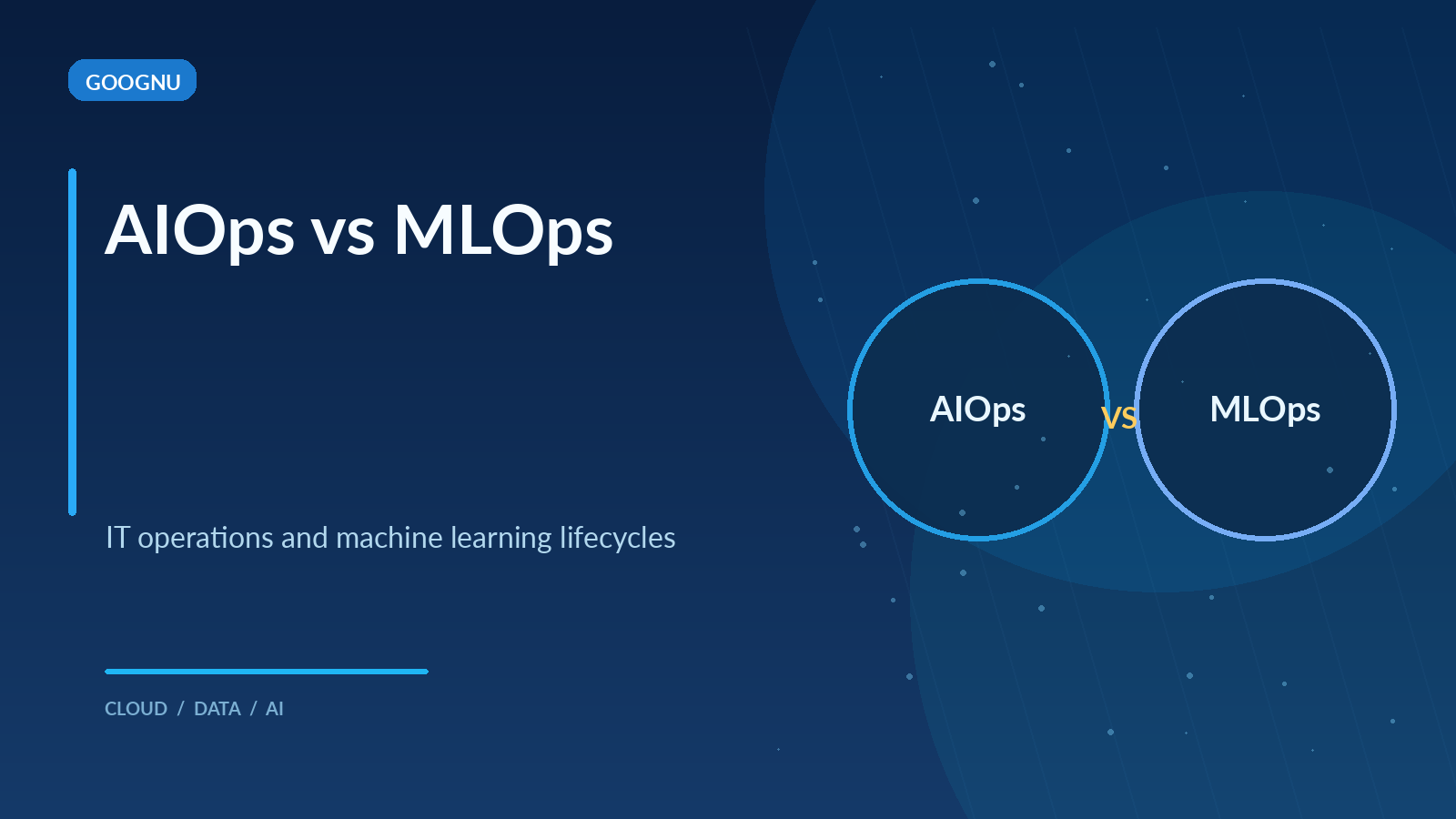
Artificial Intelligence for IT Operations, commonly known as AIOps, helps teams handle this complexity. It uses artificial intelligence, machine learning, and data analysis to identify unusual behaviour, connect related events, and support faster incident investigation.
For businesses that depend on reliable digital services, AIOps solutions offer a way to make operational data more useful and reduce some of the manual work involved in maintaining IT systems.
Understanding AIOps Beyond Traditional Monitoring
Traditional monitoring tools track specific conditions, such as high CPU usage, low disk space, or slow application response times. They usually notify teams when a metric crosses a predefined threshold.
This approach is useful, but it can create problems in large environments. A single application failure may trigger alerts from several servers, databases, and connected services. Engineers must determine which alerts are related and which indicate the underlying issue.
AIOps adds another layer of analysis. It examines operational data from different sources, learns patterns from available information, and identifies events that may require attention.
For example, a sudden increase in website response time may occur alongside rising database latency and growing memory usage. Instead of treating each alert as a separate problem, an AIOps platform may connect these signals and highlight a possible relationship.
The system does not automatically know the correct answer in every situation. Its findings depend on the quality of the data, the methods used, and the environment being monitored. Engineers still need to validate important findings and decide how to respond.
How AIOps Works in an IT Environment
AIOps brings several operational activities together, turning raw system information into insights that IT teams can investigate and act on.
Step 1: Collecting Operational Data
The process starts with information from servers, applications, cloud platforms, databases, networks, and monitoring systems. This information can include performance metrics, event records, application logs, and infrastructure alerts.
Collecting data from multiple sources gives the platform a broader view of the IT environment. It also helps teams investigate problems that involve several connected services rather than one isolated component.
Step 2: Identifying Patterns and Unusual Activity
AI and machine learning techniques analyse incoming data to understand normal behaviour and detect unusual changes. Depending on the platform, this may include unexpected traffic increases, unusual resource consumption, or changes in application response times.
For instance, a server that usually uses a steady amount of memory may begin consuming more resources throughout the day. An AIOps system can flag the change for investigation before it causes a service interruption.
Step 3: Connecting Related Events
AIOps tools can group alerts that may be connected to the same incident. This helps reduce duplicate notifications and gives engineers more context about what happened.
A database slowdown, for example, may affect several applications. Correlating these events can help the team focus on the shared dependency instead of investigating each application separately.
Step 4: Supporting Investigation and Response
Once a potential issue has been identified, the platform may provide diagnostic information, suggest possible causes, or recommend an appropriate response. Some systems can also trigger predefined actions, provided the required permissions and safeguards are in place.
This process helps IT teams move from simply receiving alerts to understanding and managing operational problems more effectively.
Five Ways AIOps Solutions Improve IT Operations
The value of AIOps depends on how well its capabilities match an organisation's operational challenges. The following applications are among the most useful.
1. Reducing Alert Overload
Large IT environments can generate more alerts than teams can reasonably review one by one. When several notifications describe the same underlying incident, important signals may be buried among less relevant messages.
AIOps solutions can group related alerts, identify repeated patterns, and help teams prioritise events that appear more urgent. This gives engineers a clearer starting point when investigating a problem.
However, alert reduction should not mean hiding useful information. Teams need to review how alerts are grouped and ensure that critical events remain visible.
2. Detecting Problems Earlier
Some technical issues develop gradually. Memory consumption may increase over time, application response times may become slower, or network traffic may behave differently from its usual pattern.
AIOps can analyse historical and current operational data to identify these changes. Earlier detection gives teams more time to investigate potential causes and take preventive action.
Predictive capabilities can also help estimate when resources may become insufficient. These estimates are useful for planning, although unexpected workload changes can still occur.
3. Speeding Up Incident Investigation
Finding the source of a problem often takes longer than detecting it. Engineers may need to compare logs, inspect metrics, review recent changes, and check dependencies across several systems.
AIOps can bring relevant events together and suggest possible relationships. For example, if an application becomes unavailable shortly after a configuration change, the platform may help engineers connect the timing of the change with the resulting alerts.
This does not replace proper troubleshooting. Instead, it gives teams useful evidence to examine and can reduce the time spent searching through unrelated information.
4. Automating Repetitive Tasks
IT teams regularly perform routine actions such as collecting diagnostic logs, checking service health, restarting approved services, and routing incidents to the correct support group.
AIOps can support automation by identifying conditions that match established workflows. When a known failure occurs, a system might gather relevant logs and run an approved diagnostic check automatically.
More advanced implementations may carry out corrective actions under predefined rules. High-impact changes should still require suitable approval, testing, and rollback options to prevent automation from causing additional problems.
5. Improving Service Reliability
Application downtime affects employees, customers, and business operations. By identifying unusual behaviour, correlating incidents, and supporting faster responses, AIOps can help teams maintain more reliable services.
It can also provide insights into recurring problems. If similar incidents happen repeatedly, teams can use the collected information to investigate the underlying weakness rather than treating every occurrence as a separate event.
Reliability improvements depend on how the organisation uses these findings. Better visibility is valuable, but teams must still address the causes of recurring failures.
Where Businesses Can Apply AIOps
AIOps can support several areas of IT management, depending on the organisation's infrastructure and operational priorities.
Cloud infrastructure: Teams can examine resource utilisation, identify unusual performance patterns, and investigate issues across cloud services.
Application performance: Operational data can help reveal slow requests, service dependencies, and conditions that affect application availability.
Network operations: AIOps can assist with identifying unusual traffic patterns, repeated connectivity problems, and performance changes.
IT service management: Teams can use event analysis to support incident prioritisation, ticket routing, and investigation workflows.
Capacity planning: Historical usage patterns can help organisations estimate future infrastructure needs and review resource allocation.
These applications are especially relevant to organisations managing distributed systems, multiple cloud environments, or services that must remain available throughout the day.
What to Consider Before Adopting AIOps
AIOps implementation should begin with a clear operational problem rather than a decision to adopt AI simply because it is available.
First, review the quality and coverage of your existing monitoring data. Incomplete logs, inconsistent timestamps, and missing metrics can limit the accuracy of analysis. Integrating information from separate tools may also require additional planning.
Next, identify the outcomes you want to improve. These could include fewer duplicate alerts, shorter incident investigation times, earlier detection of performance issues, or less manual diagnostic work.
Security and access controls are equally important. An AIOps platform may process sensitive operational information or connect to systems that support critical services. Access should be restricted, and automated actions should be limited to approved tasks.
Start with a manageable use case, evaluate the results, and expand only when the system provides measurable value. Human review remains important for complex incidents, uncertain recommendations, and changes that could affect production services.
Frequently Asked Questions
1. What are AIOps solutions used for?
AIOps solutions help IT teams analyse operational data, detect unusual activity, group related alerts, investigate incidents, and automate selected tasks. Their purpose is to improve the visibility and management of IT systems.
2. How is AIOps different from traditional monitoring?
Traditional monitoring often relies on predefined thresholds and rules. AIOps adds data analysis and machine learning techniques to identify patterns, correlate events, and provide additional context for investigating problems.
3. Can AIOps prevent downtime?
AIOps can help detect warning signs and support earlier intervention, which may reduce the likelihood or duration of some outages. However, it cannot guarantee uninterrupted services or identify every possible failure.
4. Does AIOps replace IT operations teams?
No. AIOps supports engineers by reducing repetitive analysis and providing useful operational insights. People remain responsible for validating findings, resolving complex incidents, and making important infrastructure decisions.
5. Is AIOps useful for small businesses?
It can be useful when a business has enough operational complexity to justify the investment. Smaller organisations should assess their monitoring needs, existing tools, implementation costs, and expected benefits before adopting an AIOps platform.
Conclusion
AIOps helps organisations manage IT complexity by turning operational data into useful insights. From reducing alert overload and detecting unusual behaviour to supporting incident investigation and routine automation, it can improve how teams monitor and maintain their systems.
The best results come from matching AIOps solutions to specific business needs, maintaining reliable data, and setting clear boundaries for automation. With a focused implementation and ongoing evaluation, businesses can give IT teams better information to support service reliability and day-to-day operations.