

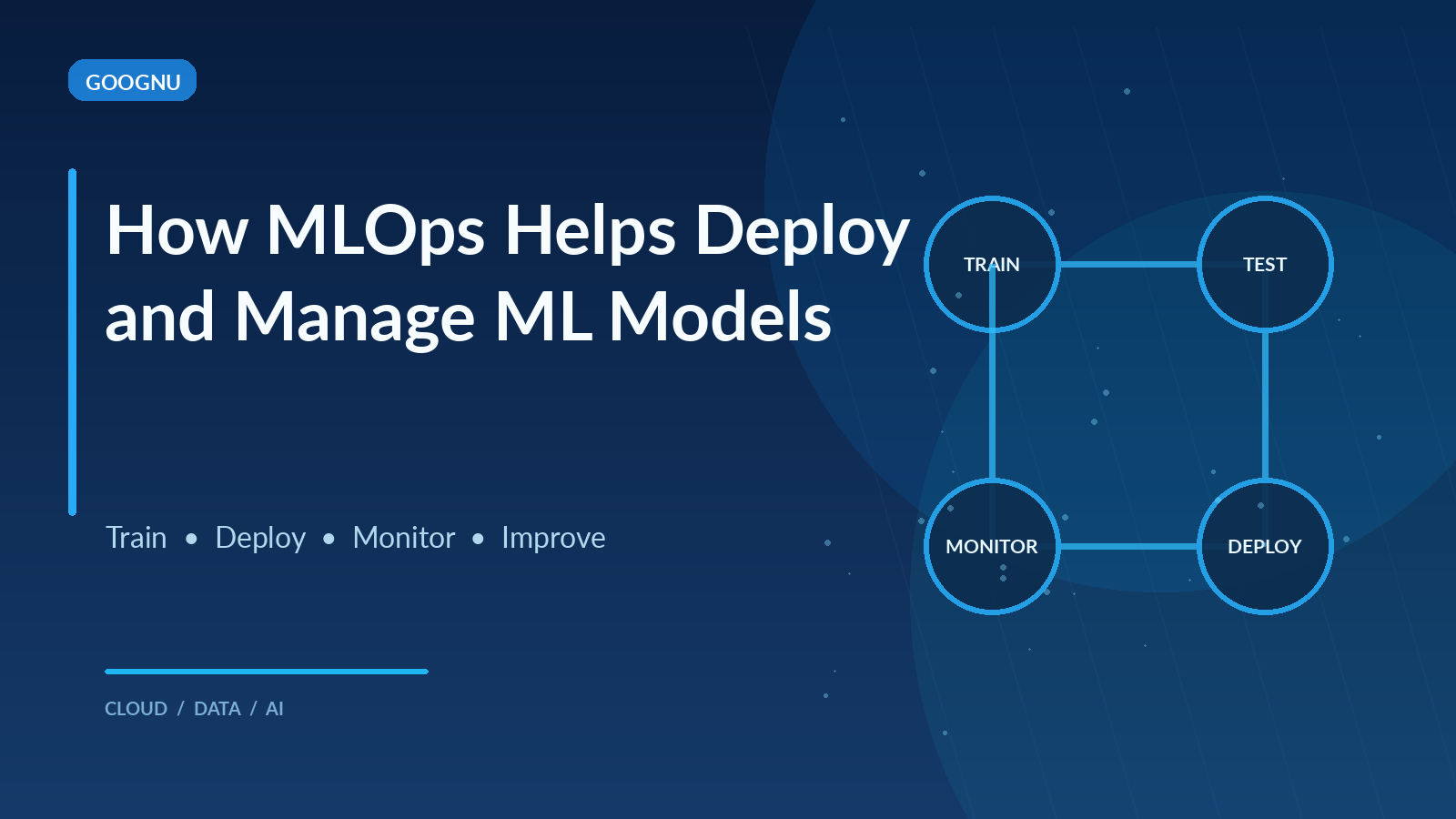
Building a machine learning model is only one part of using AI in a business. The real challenge often begins when the model needs to work with live data, support daily operations, and deliver reliable results over time.
For example, a retailer might build a model to predict product demand. It may perform well during testing, but customer behaviour can change, sales patterns can shift, and new data can affect its predictions. Without regular monitoring and updates, the model may gradually become less useful.
This is where MLOps services can help. MLOps brings machine learning development and operational practices together so businesses can deploy models, monitor their performance, and maintain them as requirements change.
Why Is Managing Machine Learning Models So Difficult?
A machine learning model does not necessarily keep working well just because it performed accurately during development. It depends on data, software, infrastructure, and the conditions in which it operates.
Several challenges can appear after deployment.
Changing data: Customer preferences, market conditions, and business activity can change, making the data different from what the model learned during training.
Manual deployment: Moving models from development into production can involve repeated technical steps, increasing the chance of mistakes.
Limited monitoring: Teams may not notice declining prediction quality until it starts affecting business decisions.
Reproducibility problems: Without proper records, it can be difficult to identify which dataset, code, or model version produced a particular result.
Scaling difficulties: A model that works with a small dataset may require different infrastructure when the number of users or predictions increases.
These issues can make machine learning projects expensive to maintain. MLOps helps businesses establish consistent processes for handling them.
What Does MLOps Do?
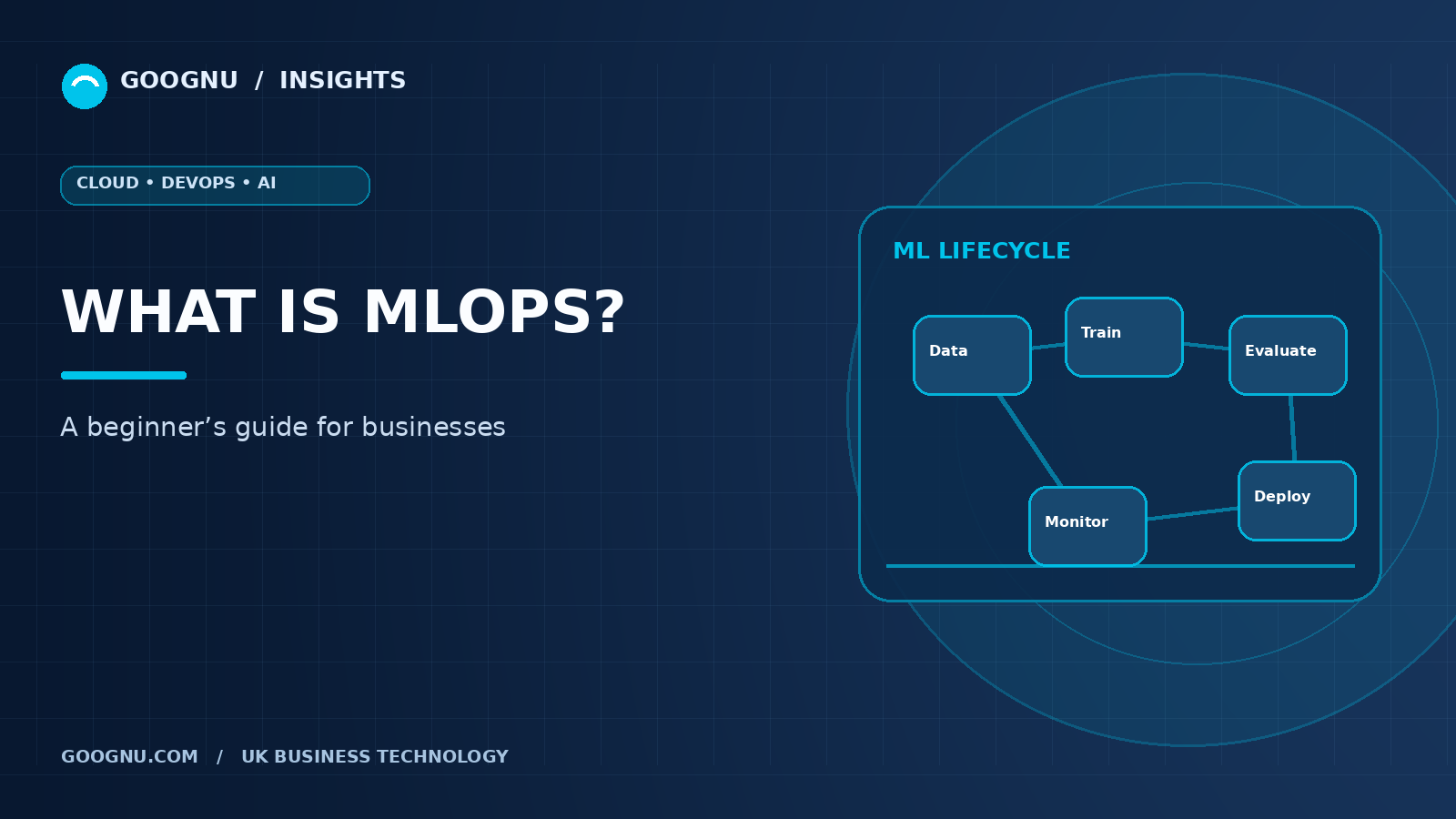
MLOps stands for Machine Learning Operations. It applies automation, monitoring, version control, and collaboration practices to the machine learning lifecycle.
Traditional software usually follows a defined path from development to testing and release. Machine learning adds more moving parts because teams must also manage training data, model versions, experiments, and prediction quality.
MLOps connects these activities into a repeatable workflow. Data scientists can develop models, engineers can prepare them for deployment, and operations teams can monitor how they behave in real environments.
For instance, a financial services company using a model to identify unusual transactions needs more than an accurate algorithm. It also needs a controlled way to release model updates, track performance, and investigate unexpected results.
The aim is to make machine learning systems easier to maintain and improve, rather than treating each deployment as a separate project.
How MLOps Helps Businesses Deploy Models
A structured MLOps process makes it easier to move a model from an experiment into a working business application.
1. Automates Repeated Tasks
Preparing data, training models, running tests, and deploying updates can involve many manual steps. Automating suitable tasks helps teams follow the same process each time.
For example, a pipeline could start model training when approved new data becomes available. It could then run validation checks before allowing the model to move to the next stage.
Automation reduces repetitive work, although important approvals and checks may still need human involvement.
2. Makes Model Deployment More Consistent
A model may work in a development environment but fail when deployed because of differences in dependencies, configuration, or infrastructure.
MLOps helps teams standardise how models are packaged, tested, and released. Version control also makes it easier to identify the model currently in use and return to an earlier version if a release causes problems.
This gives businesses a clearer process for introducing changes without relying entirely on manual instructions.
3. Supports Reliable Testing
Machine learning models need testing beyond checking whether the application runs correctly. Teams also need to evaluate prediction quality and confirm that a new model meets agreed requirements.
An MLOps workflow can include checks for data quality, model accuracy, processing time, and other relevant measures. If a model fails an important check, the workflow can prevent it from being deployed.
The tests should reflect the business purpose of the model. A recommendation system and a fraud detection model, for example, need different evaluation measures.
What Happens After a Model Goes Live?
Deployment is not the end of the process. Models need ongoing attention because their performance and operating conditions can change.
Monitoring model performance: Teams can track prediction quality, response times, failures, and resource usage. Where reliable labels become available later, they can also compare predictions with actual outcomes.
Detecting data drift: Data drift occurs when the characteristics of incoming data change compared with the data used during model development. Monitoring can help teams identify changes that may require investigation.
Managing model updates: When a model needs retraining or replacement, versioning and testing help teams manage the change in a controlled way.
Planning for recovery: Keeping records of model versions and deployment changes makes it easier to investigate problems and restore an earlier working version when appropriate.
Monitoring does not mean every change requires automatic retraining. Teams should assess whether a change affects the model's usefulness before deciding what action to take.
Where Can Businesses Use MLOps?
MLOps is useful wherever machine learning models need to operate consistently as part of a business process.
Retail: Demand forecasting models can be monitored and updated as sales patterns, seasons, and customer preferences change.
Banking and finance: Teams can manage updates to fraud detection and risk models while maintaining records of model versions and evaluation results.
Manufacturing: Predictive maintenance models can be monitored as equipment conditions and sensor data change.
Healthcare technology: Teams developing suitable machine learning applications can manage model versions, validation processes, and performance monitoring according to their requirements.
Customer service: Businesses can maintain classification and prediction models used to route requests or analyse customer interactions.
The benefits depend on the model, the quality of available data, and how the organisation uses its predictions. MLOps improves the management process, but it cannot make a poorly designed model accurate on its own.
Choosing the Right MLOps Approach
Businesses do not always need a complicated MLOps platform from the beginning. The right approach depends on how many models they manage, how often those models change, and how critical they are to daily operations.
A business running one experimental model may only need basic version control, repeatable training, and a clear deployment process. An organisation managing dozens of production models may need automated pipelines, centralised monitoring, access controls, and more formal approval procedures.
Before investing in tools, consider:
Which parts of model development and deployment currently require the most manual work?
How will the team identify a decline in model performance?
Who will approve new model versions?
What records are needed to reproduce training and deployment?
How will the business respond if a model stops producing useful results?
These questions help teams choose practical improvements instead of adopting technology they may not need.
For businesses that need specialist support, Goognu can be a starting point for exploring MLOps requirements and planning an approach that fits their machine learning environment.
Final Thoughts
Machine learning models need more than successful training to deliver lasting value. They must be deployed carefully, monitored in real conditions, and updated when data or business requirements change.
MLOps services help businesses create repeatable processes for these tasks. With suitable automation, testing, version control, and monitoring, teams can manage models more consistently and spend less time dealing with avoidable deployment problems.
The best starting point is to review how your models are currently managed and identify the gaps that create the greatest risk or delay. From there, you can introduce MLOps practices gradually, based on the needs of your applications and the people responsible for maintaining them.
Frequently Asked Questions
1. What are MLOps services?
MLOps services help businesses manage the machine learning lifecycle, including model development workflows, testing, deployment, monitoring, version control, and updates.
2. How is MLOps different from DevOps?
DevOps focuses on improving software development and operations. MLOps builds on similar practices while also addressing machine learning requirements such as training data, experiments, model evaluation, and changes in prediction performance.
3. Does MLOps automatically retrain machine learning models?
Not necessarily. Teams can automate parts of retraining, but they should define when retraining is appropriate and validate the resulting model before putting it into production.
4. Can small businesses benefit from MLOps?
Yes. Small businesses can begin with simple practices such as tracking model versions, automating repeatable tasks, and monitoring important performance measures. The setup can become more advanced as their needs grow.
5. Why is monitoring important after deployment?
Monitoring helps teams identify technical failures, changes in incoming data, and possible declines in model performance. It provides information needed to decide whether a model requires investigation, retraining, or replacement.